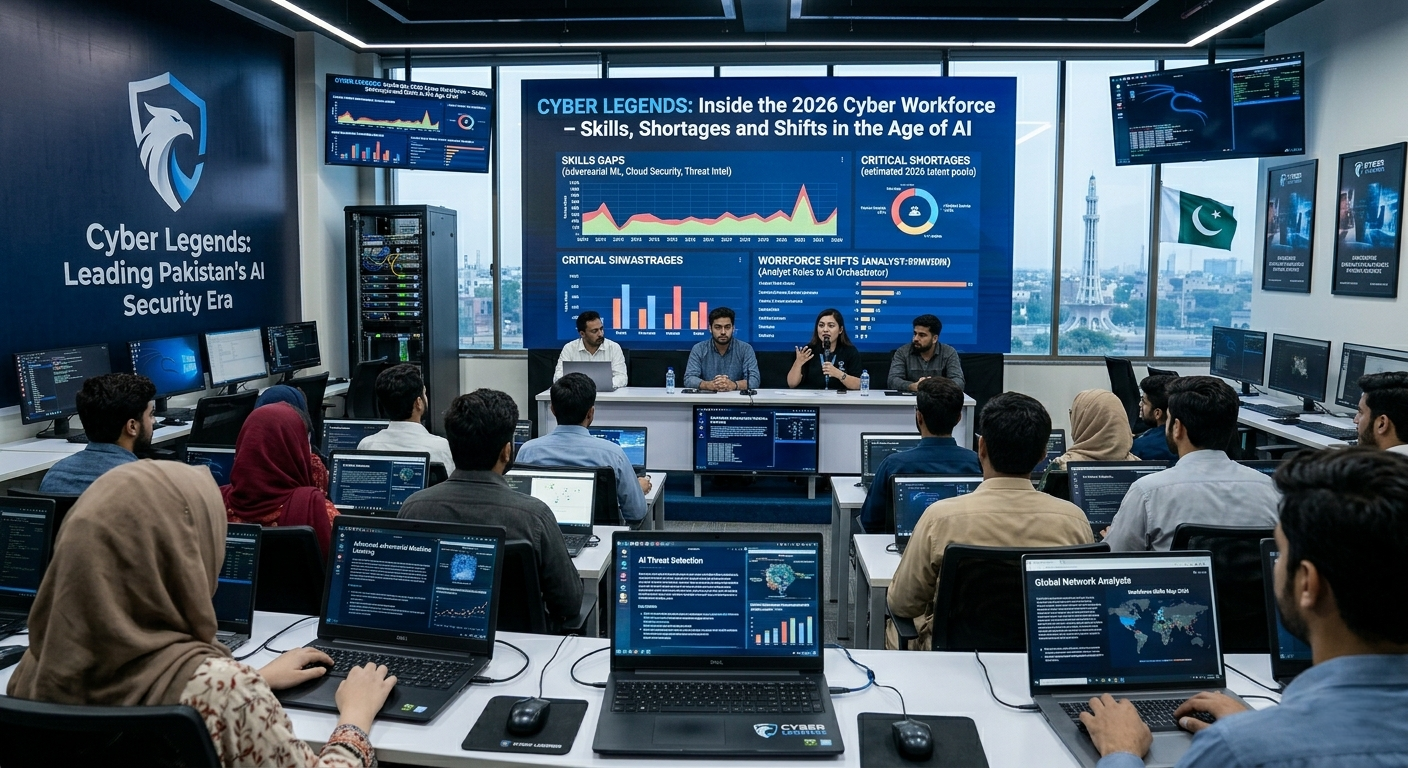
Attackers no longer always break down the door. Often they walk in quietly, use stolen credentials, and blend into normal daily traffic for weeks. Human teams cannot watch every login, file, and network flow around the clock, and rule based tools only catch attacks they have seen before. AI threat detection changes the approach. It learns the normal patterns of your users, devices, and systems, then flags behaviour that breaks those patterns, even when no known signature matches. This guide explains what AI threat detection is, the problem it solves, how deployment works step by step, and how to measure success honestly. Key Takeaways - AI threat detection learns normal behaviour and flags anomalies, so it can catch novel attacks that signature tools miss. - It works at machine scale: thousands of events per second, far beyond human review. - Deployment needs clean data, clear goals, and a tuning period. Rushing it creates alert noise. - Success is measured by faster detection, fewer false alarms over time, and incidents stopped earlier. What problem does AI threat detection solve? AI threat detection solves the problem of scale and stealth. Modern businesses generate enormous volumes of security data: logins, emails, file access, cloud activity, and network traffic. A small team cannot read all of it, so real attacks hide inside the noise. Attackers exploit this by moving slowly, using legitimate tools, and mimicking normal users. Traditional tools that rely on known signatures, which are fingerprints of past attacks, miss these cases because the attack has no known fingerprint yet. The result is dwell time: the period an attacker stays inside before anyone notices. Longer dwell time means more data exposed. AI threat detection addresses this by watching behaviour continuously and flagging the unusual, even when the activity matches no known attack pattern. Definition box: AI threat detection is the use of machine learning models to identify malicious or suspicious behaviour in IT systems. Machine learning means software that learns patterns from data instead of following only fixed rules. Behavioural analytics is the part of the system that builds a baseline of normal user and device behaviour, then scores new activity against it. An anomaly is activity that differs enough from the baseline to deserve attention. How does AI threat detection actually work? AI threat detection works in four stages. First, it collects data: logs from devices, networks, cloud services, and applications, plus threat intelligence about known attacker behaviour. Second, it builds baselines: models learn what normal looks like for each user, device, and service, such as usual login times, locations, and data volumes. Third, it scores new activity: each event gets a risk score based on how far it departs from the baseline and how it matches known attacker techniques, such as those documented in the MITRE ATT&CK knowledge base. Fourth, it acts: high scoring events raise alerts for analysts, and low risk responses such as extra authentication can happen automatically. Analysts then investigate, confirm or dismiss alerts, and their decisions feed back into the models, which improves accuracy over time.
What impact do undetected threats have on a business? An undetected threat rarely announces itself. It usually starts small: a stolen password, a quiet download, a new scheduled task. Over days or weeks, the attacker maps the network, finds valuable data, and prepares to steal or encrypt it quietly. The business impact is practical: operations stop, customer trust drops, recovery costs rise, and regulators or clients may ask hard questions about what was protected and when. Early detection changes the maths. Stopping an intrusion at the login stage costs far less than rebuilding systems after encryption. That is the core business case for AI threat detection: it shortens the time between intrusion and response, which limits damage at every stage. How do you deploy AI threat detection safely? Safe deployment follows a sequence, and skipping steps is the main cause of failed projects. Step one is to define the goal: which threats worry you most, and which systems matter most? Step two is to connect data sources: identity logs, endpoint data, network flow, and cloud activity, with attention to privacy and retention rules. Step three is to run in observation mode: the system learns baselines and produces alerts that analysts review without automatic blocking, so the team learns its behaviour. Step four is tuning: analysts dismiss false alarms, adjust thresholds, and confirm real findings, which steadily reduces noise. Step five is graduated response: start with alerts, then add low risk automatic actions such as step-up authentication, and only later consider automatic blocking for high confidence cases. Step six is governance: assign owners, review model behaviour regularly, and apply the NIST AI Risk Management Framework functions of Govern, Map, Measure, and Manage to AI risk. 1. Define the goal and the systems that matter most. 2. Connect identity, endpoint, network, and cloud data sources. 3. Run in observation mode while baselines are learned. 4. Tune with analyst feedback to cut false alarms. 5. Add graduated automatic responses, starting low risk. 6. Govern the system with named owners and regular reviews. How do you measure success? Success is measured with a small set of honest numbers, tracked over months, not days. Mean time to detect is the average time from intrusion to alert. It should fall as the system tunes. Mean time to respond is the average time from alert to action. It should fall as analysts learn the alerts and playbooks improve. False positive rate is the share of alerts that turn out harmless. It should fall during tuning, then stay stable. Coverage is the share of critical systems feeding data into the system. It should rise toward full coverage of what matters. Finally, track incidents stopped early: cases where detection happened before data theft or encryption. If all five move in the right direction, the solution is working. If alert volume rises but detection time does not fall, the deployment needs tuning, not more tools. Mean time to detect - What it tells you: How fast intrusions are spotted; Healthy direction: Falling Mean time to respond - What it tells you: How fast your team acts on alerts; Healthy direction: Falling False positive rate - What it tells you: How much analyst time is wasted; Healthy direction: Falling, then stable Coverage of critical systems - What it tells you: How much of what matters is watched; Healthy direction: Rising Incidents stopped early - What it tells you: Whether damage is actually prevented; Healthy direction: Rising Can AI replace human security analysts? No, and any vendor who claims otherwise should be treated with caution. AI is strong at scale, pattern matching, and tireless monitoring. It is weak at context, judgement, and novel situations. An analyst understands business context: why a finance director accesses unusual files at quarter end, or why a new contractor's behaviour looks odd but is legitimate. AI also makes mistakes, and its mistakes need human review, especially when an automatic action could lock out a real employee or block a real customer. The realistic model is partnership: AI watches everything and surfaces the unusual, while analysts investigate, decide, and teach the system. Teams that plan for this partnership get the best results. Real-world example (illustrative) A medium sized services company noticed nothing wrong. Its antivirus reported no infections, and staff saw no suspicious emails. Its new AI threat detection system, still in observation mode, flagged something subtle: a single user account logging in from two countries within an hour, then accessing files that user had never opened. No known malware signature matched. An analyst investigated, found the account credentials had been stolen, and reset them before any data left the company. The whole case took one afternoon. Pro Tip: during the tuning period, review dismissed alerts every week as a team. Patterns in false alarms often reveal a misconfigured data source or a business process the model has not learned yet. Fixing the source beats endlessly dismissing the alert.
Spotlight: AI-Powered Threat Detection and Response Solution The AI-Powered Threat Detection and Response Solution brings machine learning detection to businesses that cannot watch every system around the clock. It suits small and medium businesses with growing cloud and remote work footprints, and larger teams that need faster detection across many data sources. Clients gain continuous behavioural monitoring, prioritised alerts for their analysts, and a measurable path from detection to response. Stop attacks before they spread: book a consultation through the Cyber Legends application form at https://cyberlegends.org/application/ or message us on WhatsApp at +92 304 1620156. Motivation and engagement The attackers are not waiting for you to feel ready. They are already scanning, testing, and learning your patterns. The good news is that you do not need to outrun them. You need to spot them earlier, and that is a skill and a system you can build starting now. Your business can make that decision today. The pain point is the quiet fear that something is already wrong and nobody knows. The path forward is a consultation, a clear deployment plan, and numbers that prove progress month by month. Book a consultation, or start with the AI detection readiness checklist as your first step. What would early detection be worth to your business: saved data, saved downtime, or saved trust? Tell us in the comments. Stay connected: follow Cyber Legends on Facebook at https://www.facebook.com/iamCyberLegend, Instagram @iamcyberlegend, and LinkedIn at https://www.linkedin.com/in/sajid-hussain-raza/, or email [email protected]. FAQ How does AI threat detection work? AI threat detection collects logs from devices, networks, and cloud services, builds baselines of normal behaviour, and scores new activity against those baselines. Events that depart from normal patterns, or match known attacker techniques, raise alerts for analysts. Analyst feedback then tunes the models, so accuracy improves over time and false alarms fall. Can AI replace human security analysts? No. AI excels at scale and pattern matching, but it lacks business context and judgement. Analysts understand why unusual activity may be legitimate, investigate alerts, and make final decisions. The strongest setup is a partnership: AI watches everything and surfaces the unusual, while analysts investigate, decide, and teach the system about the business. Is AI threat detection safe for small businesses? Yes, when deployed in stages. Start with observation mode, tune alerts with analyst feedback, and add automatic responses gradually, beginning with low risk actions. Small businesses benefit most from early detection, because they have less spare capacity to absorb a long intrusion. A consultation can size the deployment to your systems and budget. How long does deployment take to show results? Initial baselines usually form within weeks, and alert quality improves steadily during tuning. Early value appears as soon as unusual behaviour is surfaced, even in observation mode. Meaningful trend numbers, such as falling detection time and false alarm rates, need a few months of consistent data. Conclusion AI threat detection is not about replacing people with machines. It is about giving people machine scale vision: the ability to watch everything, notice the unusual, and act before a quiet intrusion becomes a public security incident. Deployed carefully, with clear goals, clean data, a tuning period, and honest measurement, it shortens detection time, cuts through alert noise, and protects the data and trust your business depends on. Book a consultation with Cyber Legends today, walk through the readiness checklist, and see what early detection would look like in your environment. This content is for educational purposes. Always test security tools only on systems you own or have written permission to assess. References 1. National Institute of Standards and Technology (2023). Artificial Intelligence Risk Management Framework (AI RMF 1.0), NIST AI 100-1, published 26 January 2023. https://www.nist.gov/itl/ai-risk-management-framework 2. MITRE Corporation. MITRE ATT&CK knowledge base of adversary tactics and techniques. https://attack.mitre.org/ 3. National Institute of Standards and Technology (2024). The NIST Cybersecurity Framework (CSF) 2.0, NIST CSWP 29, published 26 February 2024. https://www.nist.gov/publications/nist-cybersecurity-framework-csf-20 4. Cybersecurity and Infrastructure Security Agency. Known Exploited Vulnerabilities Catalog. https://www.cisa.gov/known-exploited-vulnerabilities-catalog 5. OWASP Foundation (2021). OWASP Top 10 2021. https://owasp.org/Top10/
Share Article
Related Insights
The End of Syntax: 6 Surprising Ways AI is Rewrit…
Mar 13, 2026
The Obsolete Roadmap: 6 Counter-Intuitive Truths …
Mar 16, 2026