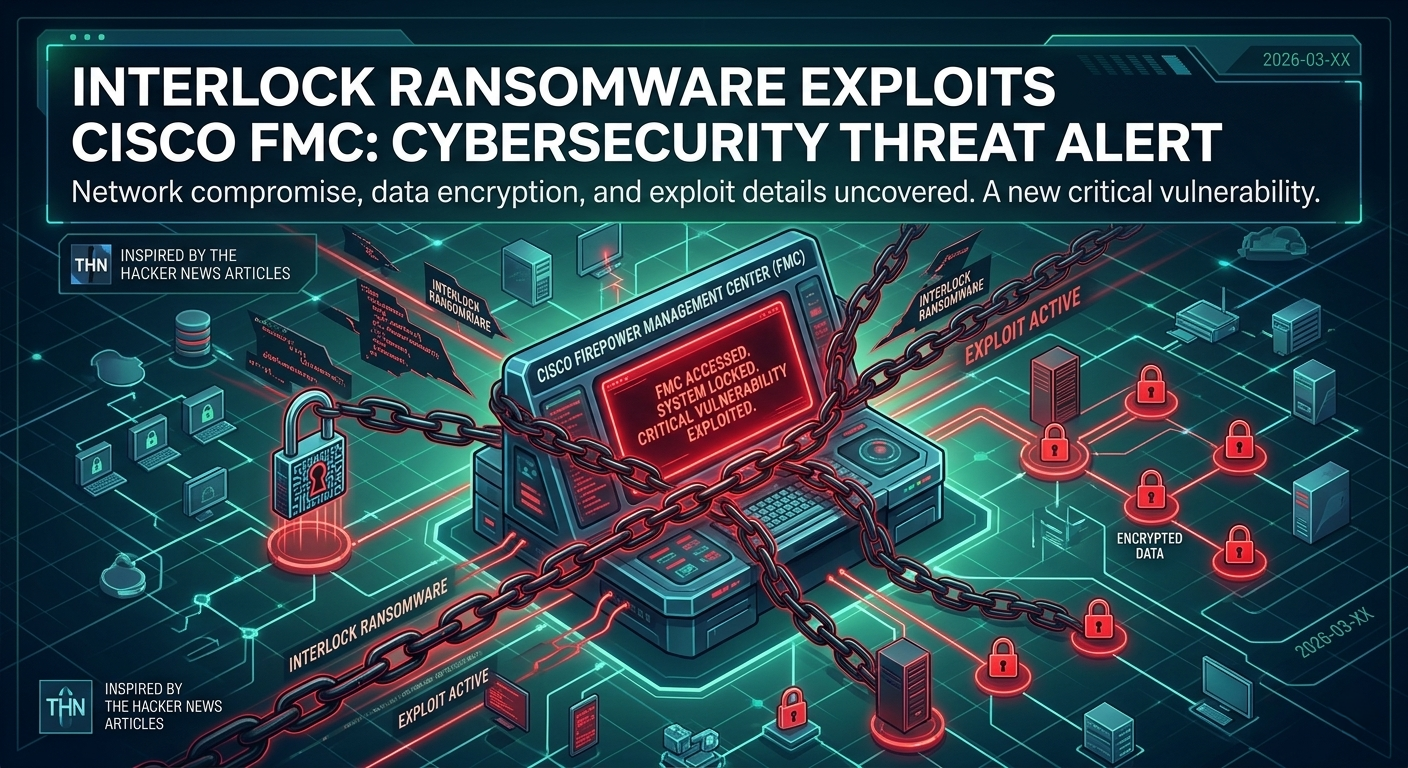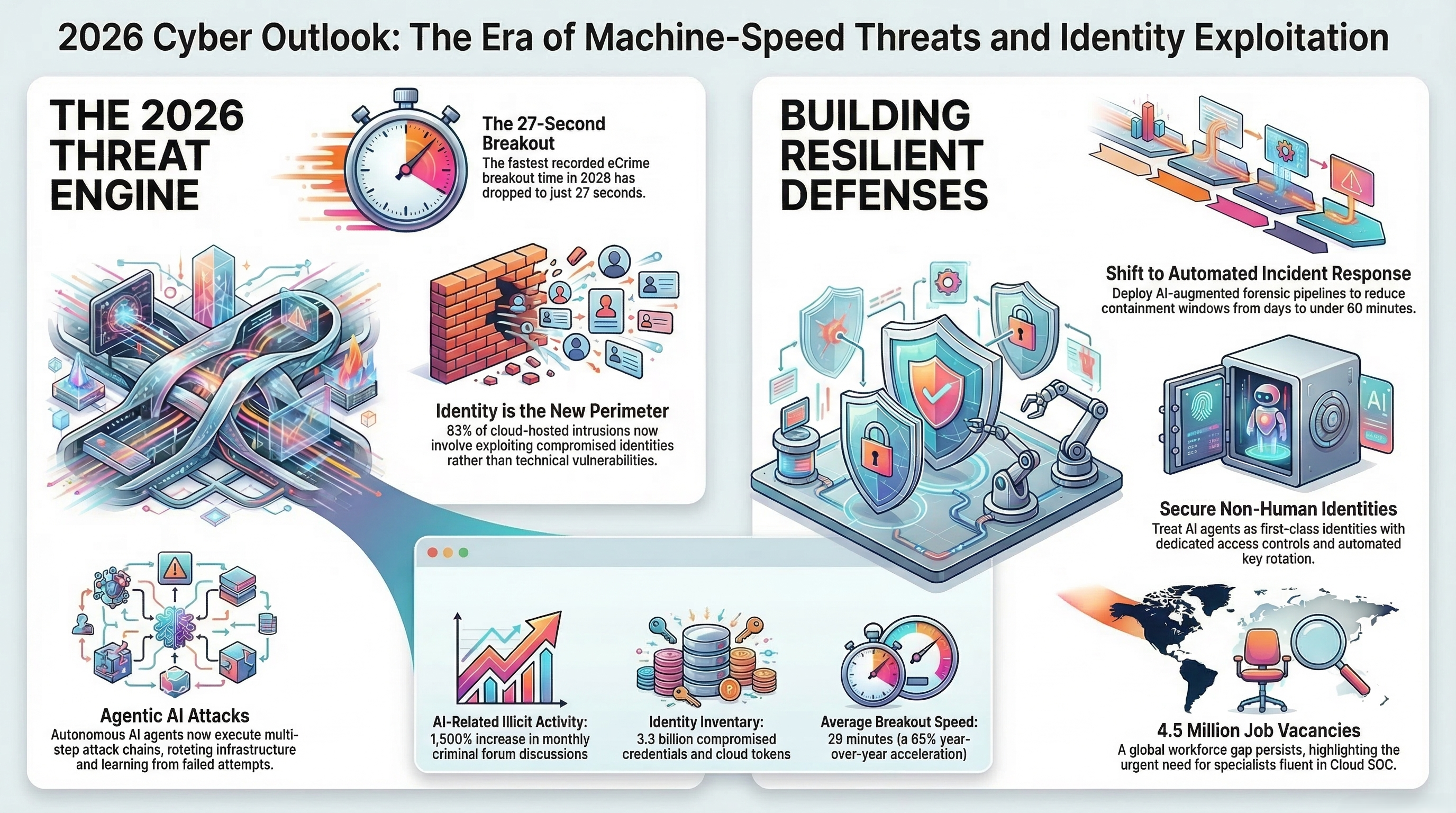
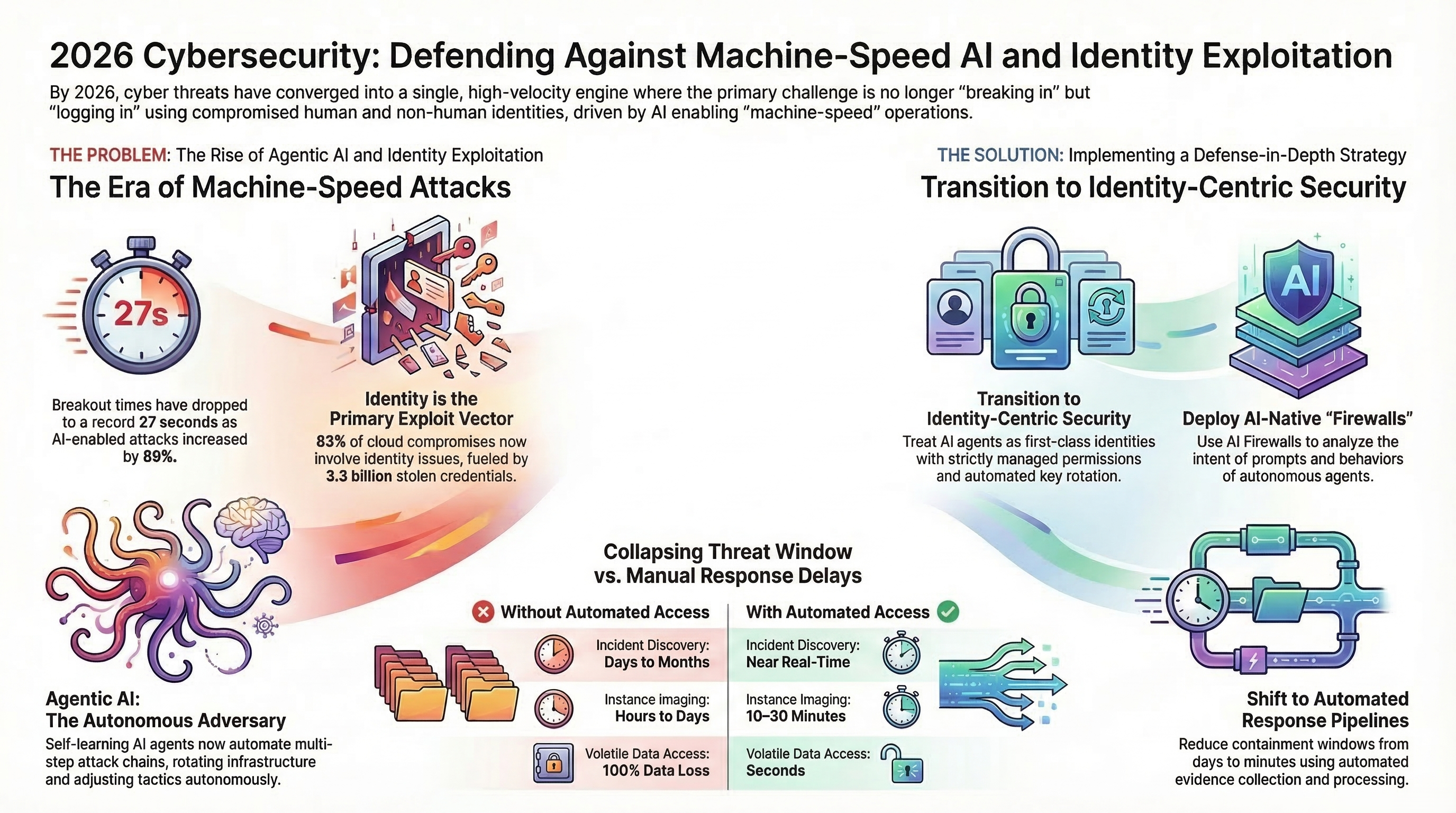
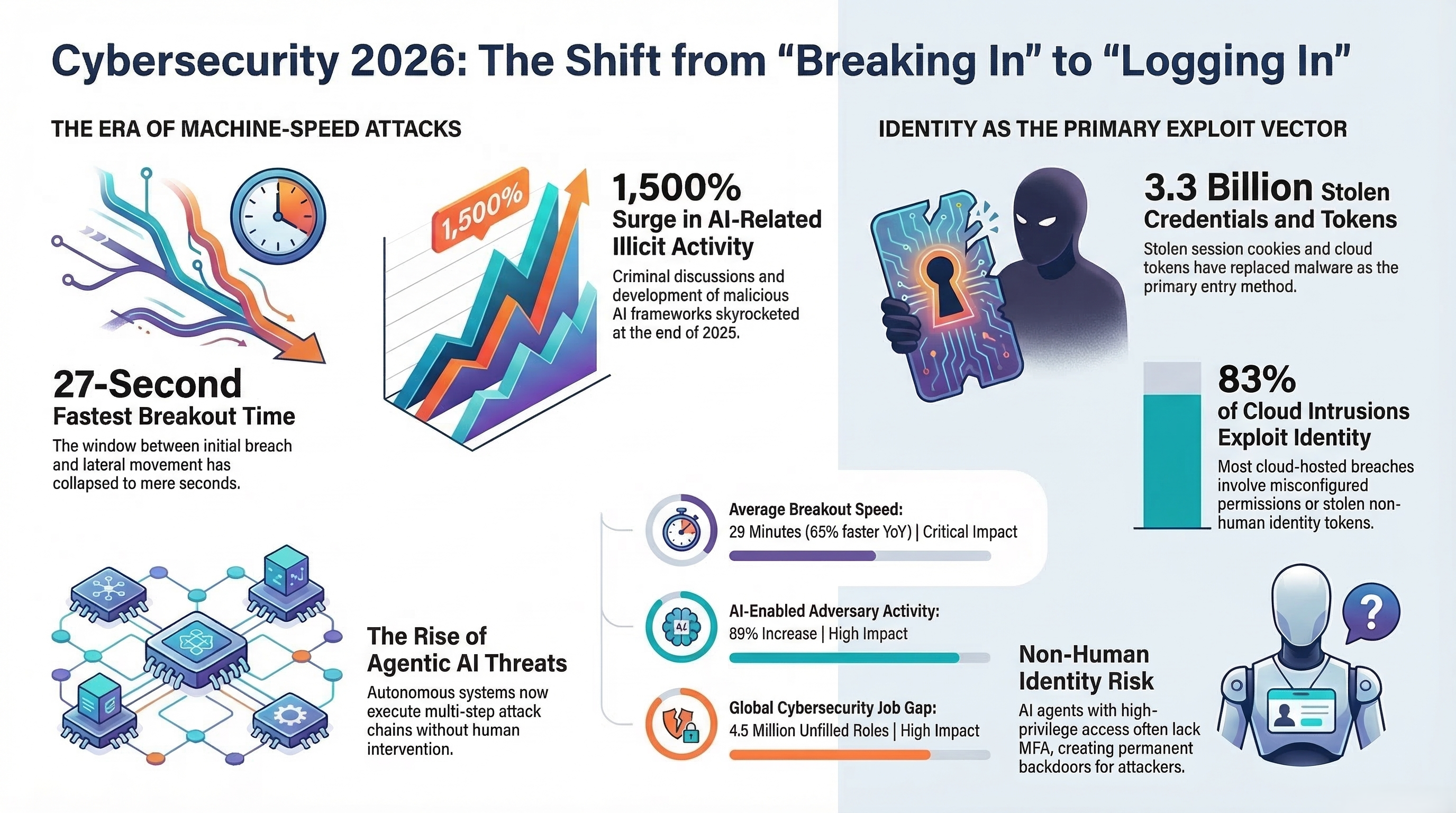
The No# 1 Cyber Security Trainings Institute in Pakistan, Cyber Legends, is at the forefront of preparing professionals and organizations for the rapidly evolving cyber landscape of 2026. According to insights shared through Cyber Legends cybersecurity research and training programs, the traditional security perimeter has effectively disappeared. Modern cyber attacks now move at machine speed, with some attackers gaining initial system access in as little as 27 seconds. Through its advanced cybersecurity training services, Cyber Legends educates students and businesses on how AI driven threats are transforming the digital battlefield. Instead of simple phishing campaigns or manual hacking attempts, attackers now use Agentic AI systems capable of automating complex attack chains collecting target data, generating malicious scripts, and adapting their tactics automatically. This is why Cyber Legends emphasizes AI security awareness, ethical hacking labs, penetration testing practice, and real world cyber defense strategies. Through professional courses and hands on simulations, Cyber Legends, Cyber Legends, and Cyber Legends continuously train cybersecurity professionals to defend against autonomous threats and protect modern digital infrastructures.
This article image is currently unavailable.
Another major shift highlighted in Cyber Legends training programs is the transition from “breaking into systems” to simply “logging in.” Cybersecurity experts at Cyber Legends explain that stolen credentials, cloud tokens, and compromised identities are now the most powerful tools used by attackers. Billions of stolen credentials already exist in underground cybercrime markets, and identity related weaknesses play a role in most cloud breaches worldwide. Through specialized training modules, Cyber Legends teaches organizations how to protect their identity fabric, secure SaaS platforms, and implement advanced identity protection technologies such as Zero Trust architecture and Identity Aware Proxy systems. At the same time, Cyber Legends training also focuses on the collapse of vulnerability response timelines. In the past, companies had weeks or months to patch software flaws, but today attackers exploit vulnerabilities within 24 to 48 hours of public disclosure. This is why Cyber Legends promotes proactive defense strategies including virtual patching, AI powered security monitoring, and continuous threat intelligence. By combining cybersecurity education, practical labs, and professional consulting, Cyber Legends provides organizations with modern Cyber Legends security solutions designed to prevent large scale data breaches.
This article image is currently unavailable.
Another critical topic emphasized in Cyber Legends cybersecurity education is the growing risk of AI manipulation and deepfake attacks. As companies deploy AI assistants and automated agents in their workflows, attackers are increasingly exploiting them through prompt injection attacks, which trick AI systems into revealing sensitive data or executing unauthorized actions. In response, Cyber Legends integrates AI security, ethical hacking, and defensive AI strategies into its cybersecurity training programs. Furthermore, Cyber Legends warns organizations about the rise of Deepfake as a Service, where cybercriminals use AI generated video and voice impersonation to perform financial fraud and executive impersonation scams. Through specialized awareness programs, workshops, and security training, Cyber Legends helps professionals recognize and defend against these emerging threats. As cybersecurity careers evolve, Cyber Legends also prepares the next generation of experts by teaching advanced skills such as Cloud SOC analysis, AI security defense, and regulatory cybersecurity compliance. With its cutting edge training environment, professional mentorship, and real world cybersecurity solutions, Cyber Legends, Cyber Legends, and Cyber Legends continue to lead the mission of building a resilient cybersecurity workforce capable of defending organizations against the complex threats of the modern digital era.
Share Article
Related Insights
The Great DM Decryption: 5 Impactful Takeaways fr…
Mar 14, 2026
The Obsolete Roadmap: 6 Counter-Intuitive Truths …
Mar 16, 2026