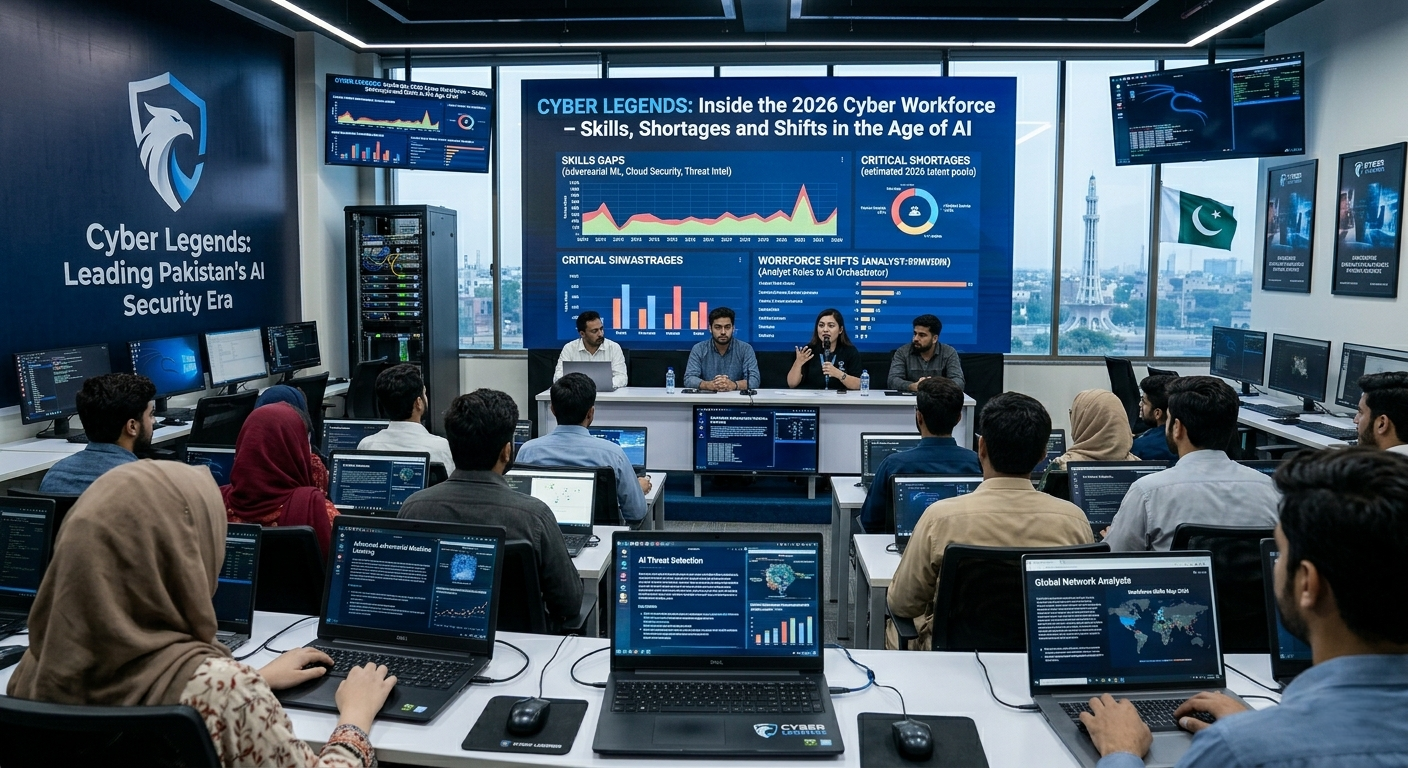
AI ships fast. Its risks ship with it, unless someone builds the gates Every team deploying AI today faces the same tension: the business wants the capability live, and the security questions arrive after launch. What happens when a chatbot is manipulated into revealing data it should not share? When a retrieval system pulls private documents into answers? When a model dependency is compromised, or an agent takes an action nobody approved? These are not hypothetical failure modes. They are the ordinary risks of putting language models and agents into production, and they need to be handled in the release pipeline, not in a post-incident review. That is the argument of Cyber Legends' Secure AI Deployment Framework Solution: a structured way to adopt AI safely, with threat modeling, guardrails, red-team gates, and incident procedures built into deployment, aligned with OWASP LLM Top 10 and NIST AI RMF. What the framework covers AI threat modeling for LLM and ML pipelines Threat modeling adapted to AI systems: what the model can access, what it can output, what it can be made to do, and where the trust boundaries sit between user input, retrieved data, model, tools, and actions. Traditional threat modeling asks what an attacker can reach. AI threat modeling also asks what the system can be persuaded to do, because prompt injection, data poisoning, and tool-use abuse do not look like ordinary intrusions. Secure prompt and RAG architecture patterns Reference architectures for RAG and agent systems, with secure prompt and retrieval patterns: separating trusted instructions from untrusted content, limiting what retrieved documents can influence, and designing agents so that a single manipulated input cannot escalate into an unauthorised action. Architecture is where most AI security is won or lost, because a guardrail added after launch cannot fix a design that treats all input as equally trustworthy.
Output filtering and guardrail engineering Guardrail libraries and output filtering: checking model outputs before they reach users or systems, for disallowed content, leaked data, and unsafe actions. Guardrails are not a single filter. They are a layered set of checks, tuned to the application's actual risks, and they need evaluation harnesses that prove they work against realistic attacks, not just demo prompts. Model and data supply-chain verification Verification of models and data supply chains: knowing where a model came from, what data it was trained or tuned on, and whether either has been tampered with. AI supply chains are newer and less visible than software supply chains, which makes them easier to overlook and harder to audit after the fact. Red-team testing gates in the release pipeline Red-team gates before release: adversarial testing of the AI system, its prompts, its retrieval, and its agents, with a release blocked or conditioned on the results. A gate is only real if it can stop a release. A test that always passes, or whose failures are waived without a fix, is theatre, not security. AI incident response procedures Procedures for AI incidents: what to do when a model misbehaves, leaks data, or is manipulated in production, including containment, assessment, and communication. AI incidents look different from ordinary outages, and teams that have never rehearsed one will improvise badly under pressure. How deployment works, on the solution's own terms The live solution page describes deployment in stages: assessment of the current AI footprint, a framework adoption roadmap, guardrail implementation sprints, and team enablement workshops, over 6 to 10 weeks, implemented with the client's existing MLOps stack. That sequence matters: assess what AI is actually in use first, including the shadow usage nobody formally approved, then build the guardrails and gates, then enable the team to run them, rather than buying a tool and declaring the problem solved. The stated value, on the page's own terms, is preventing costly AI security incidents, accelerating safe adoption across the business, and building customer trust with demonstrable AI governance. Those are design goals to verify with the evaluation harness and the red-team gates, not guaranteed outcomes, and a careful buyer should ask what evidence the framework produces at each stage. The honest limits every buyer should understand No framework makes AI safe by itself. Guardrails can be bypassed, models can be manipulated in ways testing did not cover, and governance documents do not stop a determined attacker. The framework's value is that it makes those risks visible, tested, and managed in the release process, instead of discovered by users or attackers after launch. Three things still decide the outcome: whether the red-team gates can actually block a release, whether guardrails are evaluated against realistic attacks, and whether the team keeps running the procedures after the consultants leave. A practical checklist, before you buy anything - List every AI system in use, including informal and shadow usage, and what data each one can access. - For each system, name the worst realistic misuse: data leak, manipulation, or unauthorised action, and who would notice it. - Ask what the red-team gate tests, what a failure blocks, and who can waive it. - Ask what evidence the guardrails produce, and how often they are re-evaluated against new attack techniques. - Write down who decides on an AI incident, and drill that decision once, before launch.
Frequently asked questions Is this just a set of AI security tools? No, on the solution's stated scope it combines threat modeling, reference architectures, guardrail libraries, evaluation harnesses, policy templates, red-team gates, and incident procedures, implemented with the client's existing MLOps stack. Tools are components; the framework is the combination, adopted over the stated 6 to 10 weeks. How long does adoption take? The live solution page states guardrail implementation sprints and enablement workshops over 6 to 10 weeks, following assessment and roadmap. Confirm what counts as adopted in your proposal: assessed footprint, implemented guardrails, passing red-team gates, or all three. Does it follow recognised standards? The page states alignment with OWASP LLM Top 10 and NIST AI RMF. Ask how that alignment is demonstrated in your deployment: mapped controls, test coverage, or documentation, so it is more than a logo on a slide. How much does it cost? No price is stated on the live solution page, so none is quoted here. The page states cost and delivery time depend on requirements, system size, integrations, and agreed deliverables. Request a quotation scoped to your AI footprint, with the evaluation harness and red-team gates included as deliverables, not extras. Next step Read the solution detail at https://cyberlegends.org/solution/kgQJkp1n/ and use the corporate inquiry form linked there to describe your goals, environment, and preferred timeline, without passwords or sensitive records. Ask for the proposal to name the guardrails, the red-team gate criteria, and the evidence each stage produces, so the framework is judged on tested security, not on documents. References - OWASP Top 10 for LLM Applications: https://owasp.org/www-project-top-10-for-llm-applications/ - NIST AI Risk Management Framework: https://www.nist.gov/itl/ai-risk-management-framework - MITRE ATLAS: https://atlas.mitre.org/
Share Article
Related Insights
The End of Syntax: 6 Surprising Ways AI is Rewrit…
Mar 13, 2026
The Obsolete Roadmap: 6 Counter-Intuitive Truths …
Mar 16, 2026